We Test
Can AI actually do legal work?
How do we find out? We build platforms, systems, and workflows, test them on defined legal tasks, and examine not only whether they succeed, but where they fail and why.
We Build → We Test → We Document → Tutorials
Legal AI Testing
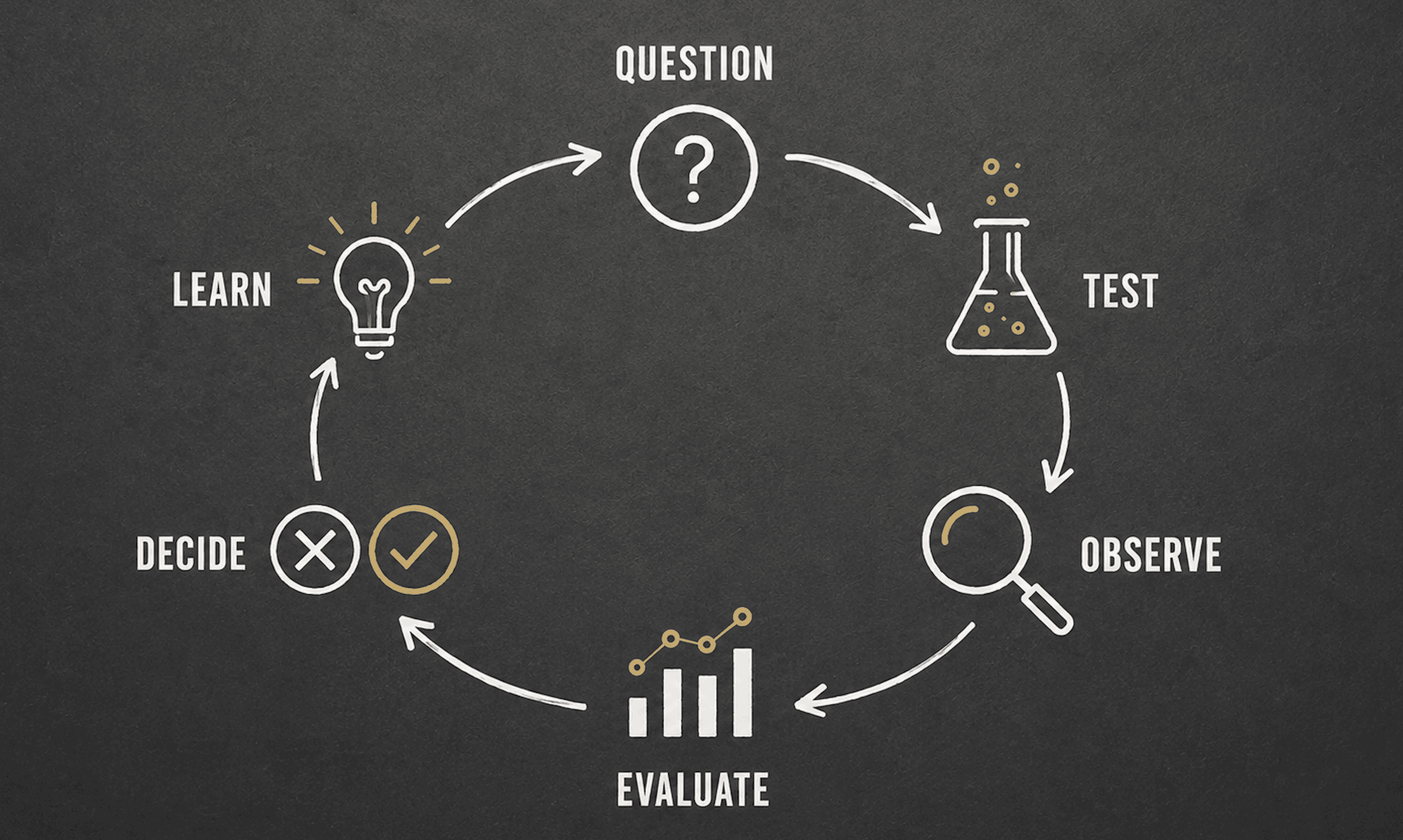
Questioning · Testing · Evaluation · Iteration
01 · The Testing Framework
How do we test legal AI systems?
Legal AI systems can fail at different levels. We test defined legal tasks, the workflows that connect them, the reliability of the resulting system, and the points where attorney judgment remains necessary.
- 01
Task Capability
Can AI actually perform a defined legal task?
- 02
Workflow Performance
Does a structured workflow produce a useful result?
- 03
System Reliability
Does an AI system behave consistently across cases and executions?
- 04
Attorney Judgment
Where is attorney judgment needed, and how should it be incorporated?
02 · Test Records
What have we tested?
Each test record captures the question, methodology, results, and what we learned.
Invention Analysis Benchmark
Testing whether an AI system can perform invention analysis across diverse technical disclosures.
Patent Prosecution · Invention Analysis · AI System · Multi-Agent AI
Workflow Reliability and LLMs
Testing whether a structured legal workflow remains reliable when its underlying LLM changes.
Workflow Execution · Reliability · LLMs · Multi-Agent AI
Attorney Feedback and Revision Loop
Testing whether attorney judgment can be reliably translated into AI revisions.
Attorney Review · Revision · Human-in-the-Loop · Work Products