Workflows
The Platform Handles Legal Work Step by Step.
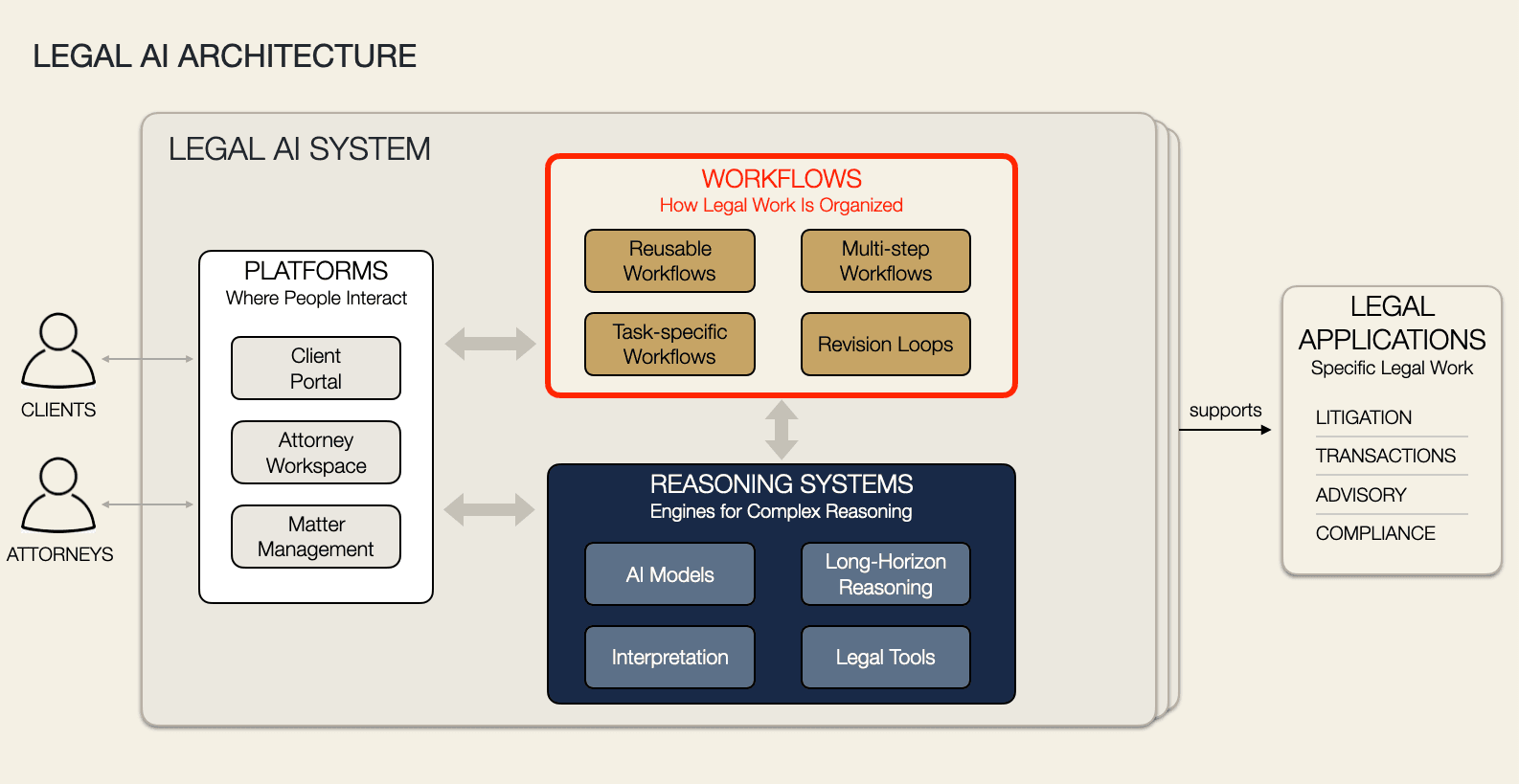
In a legal workflow, the platform moves each legal task through a series of connected steps, from client intake and AI analysis to attorney review, revision, and final work product.
Workflow Engineering
An example Invention Analysis workflow for patent drafting.
00 · Workflows
Workflows as Building Blocks
Workflows are the building blocks that organize legal work into connected steps.
01 · The Problem
A legal task is rarely one question.
Actual legal work involves more than a conversation. It requires understanding the legal task, working with documents, performing analysis, reviewing results, revising the work, and applying professional judgment. That is why structured workflows matter.
Isolated AI Interaction
- Prompt
- AI Answer
Structured Legal Workflow
- Legal Task
- Specialized AI Agents
- Intermediate Work Products
- Attorney Review
- Revision
- Final Work Products
02 · Workflow Engineering
Turning a legal task into an executable workflow.
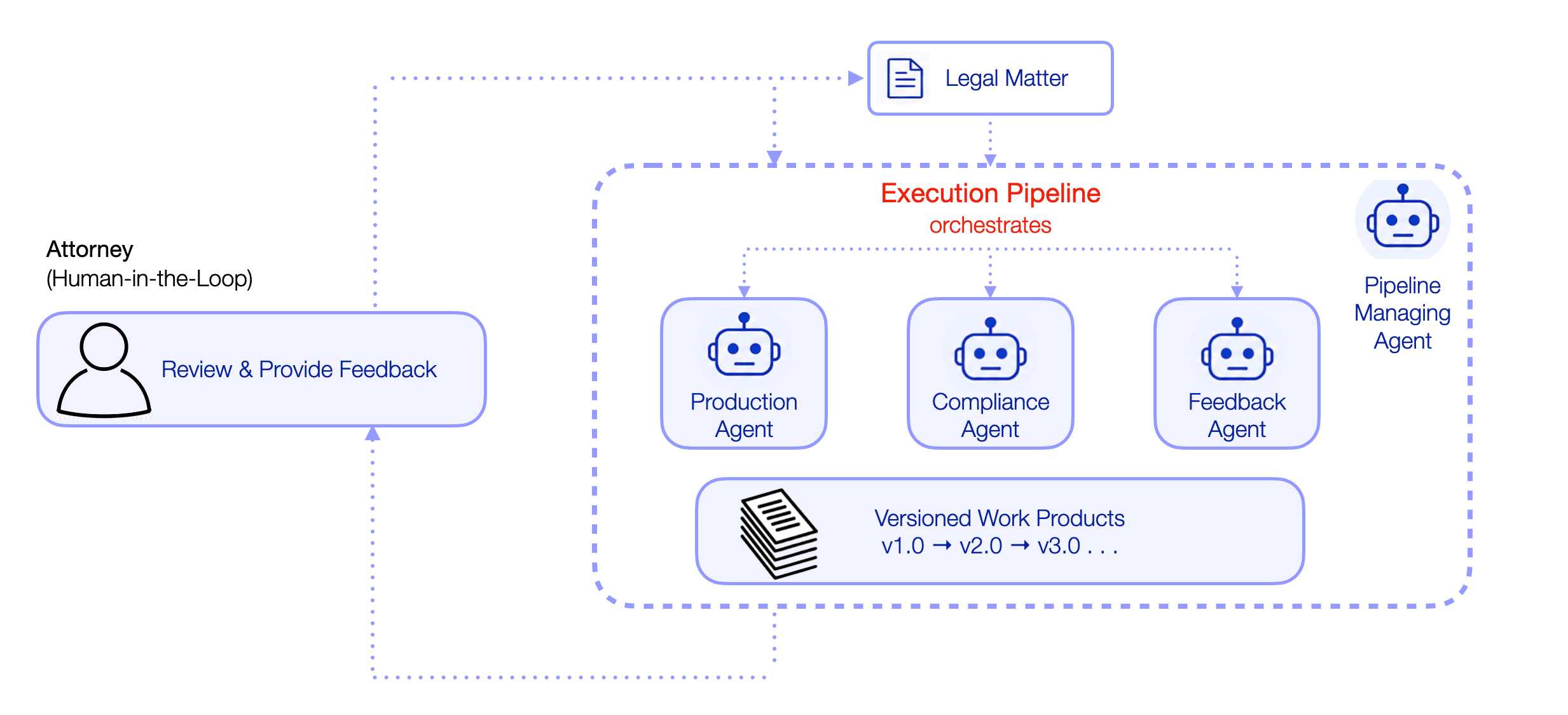
A legal task is rarely one job. The platform can organize different AI specialists around different parts of a workflow, with a pipeline orchestrator coordinating the work from one stage to the next.
Task Decomposition
Complex legal work is decomposed into executable stages.
Versioned Work Products
Every stage produces a reviewable, versioned work product.
Deterministic Execution
A pipeline orchestrates workflow execution.
Quality · Attorney-in-the-Loop
Attorney oversight remains part of the production pipeline.
| Role | Description |
|---|---|
| Attorney (human) | Reviews the work product, provides feedback, and guides the workflow. |
| Production Agent | Performs the assigned legal task and produces the work product. |
| Compliance Agent | Checks the work product against steps, requirements, and instructions. |
| Feedback Agent | Reviews attorney feedback, identifies needed changes, and guides the revision. |
03 · Example Workflow
Invention Disclosure Analysis.
An example structured workflow for analyzing an invention disclosure supporting patent drafting.
Figure 1 · Workflow Architecture
Workflow structure and revision loop.
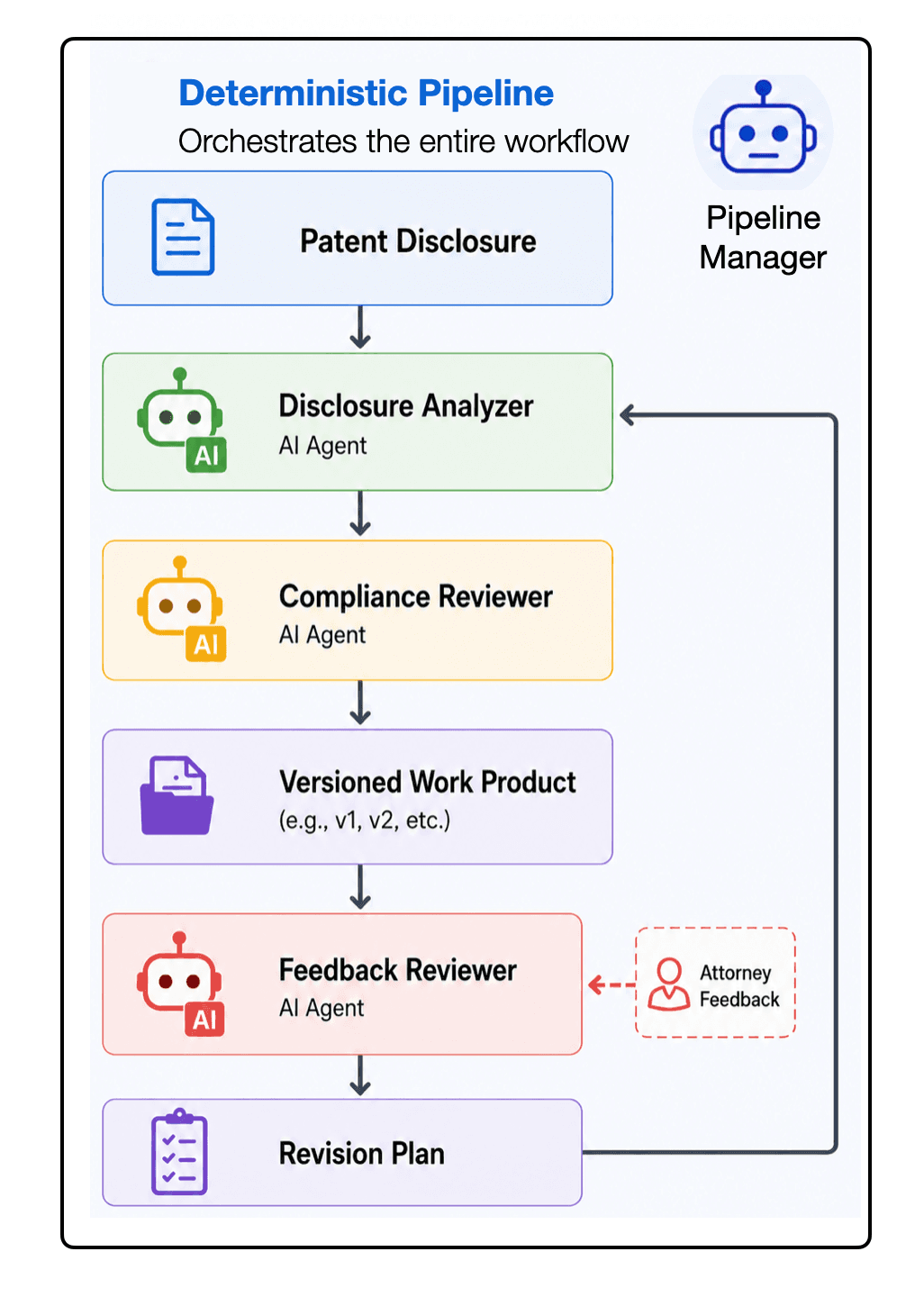
Figure 2 · Execution Interface
Chat interface for pipeline execution.
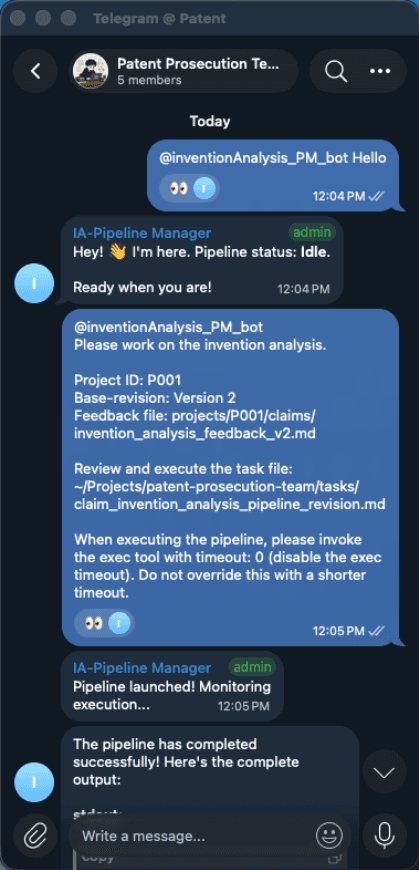
Figure 3 · Pipeline Output
Step status and generated work products.
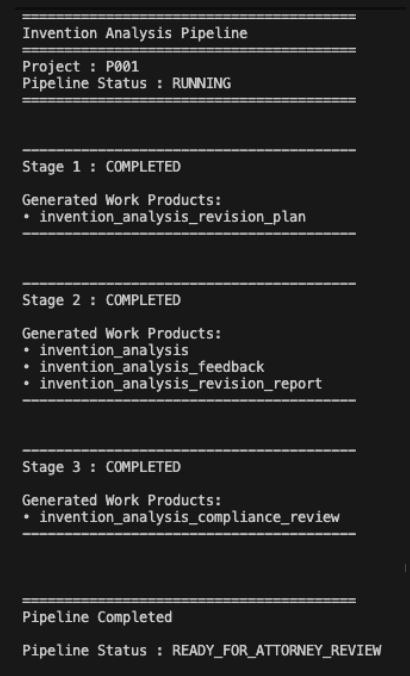
One pipeline, multiple interfaces. The same workflow can be executed through our Legal AI Services platform, external chat-based interfaces, or a command-line interface (CLI) environment without changing the underlying workflow logic.