We Build
We build AI systems
to perform legal work.
We build platforms, workflows, reasoning systems, and legal applications to explore AI-assisted legal work.
Legal AI Architecture
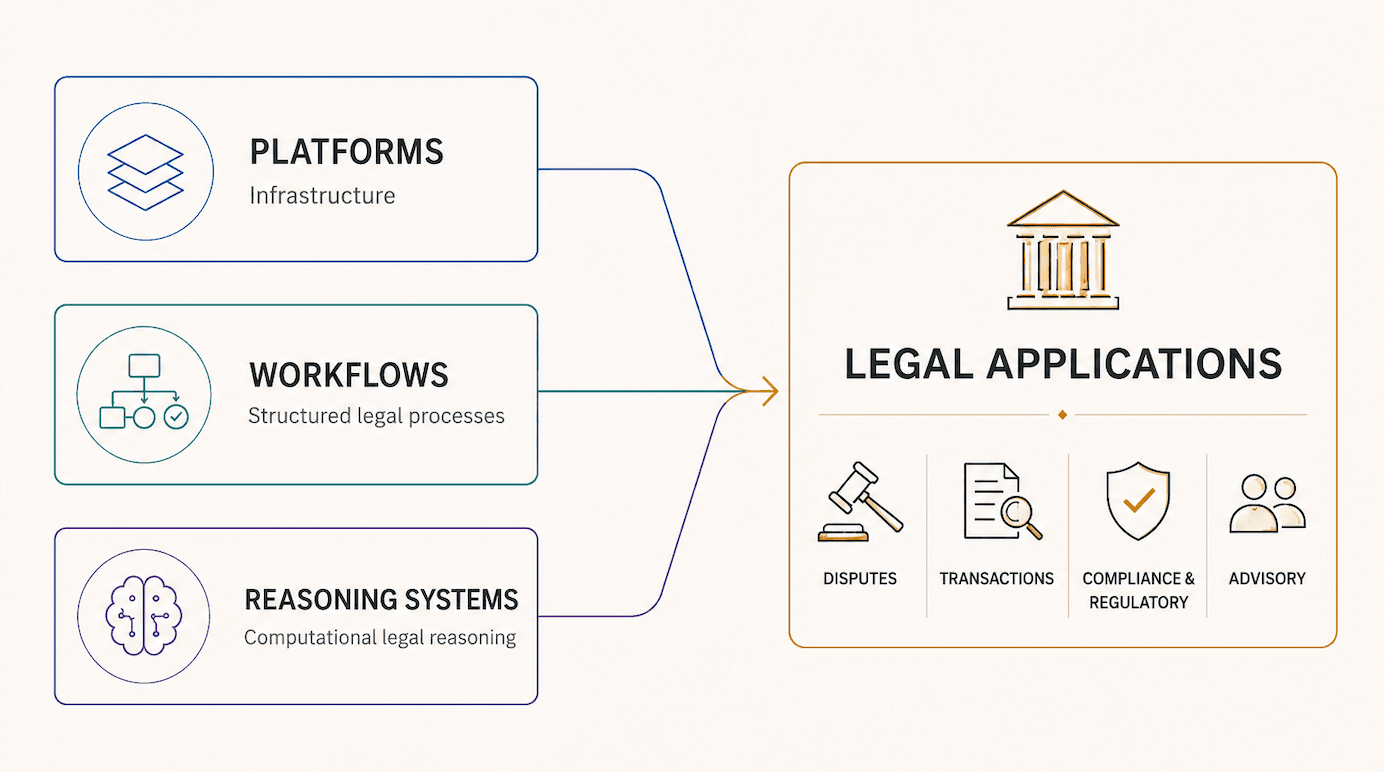
Platforms · Workflows · Reasoning Systems · Legal Applications
00 · Architecture Overview
How the Pieces Fit Together
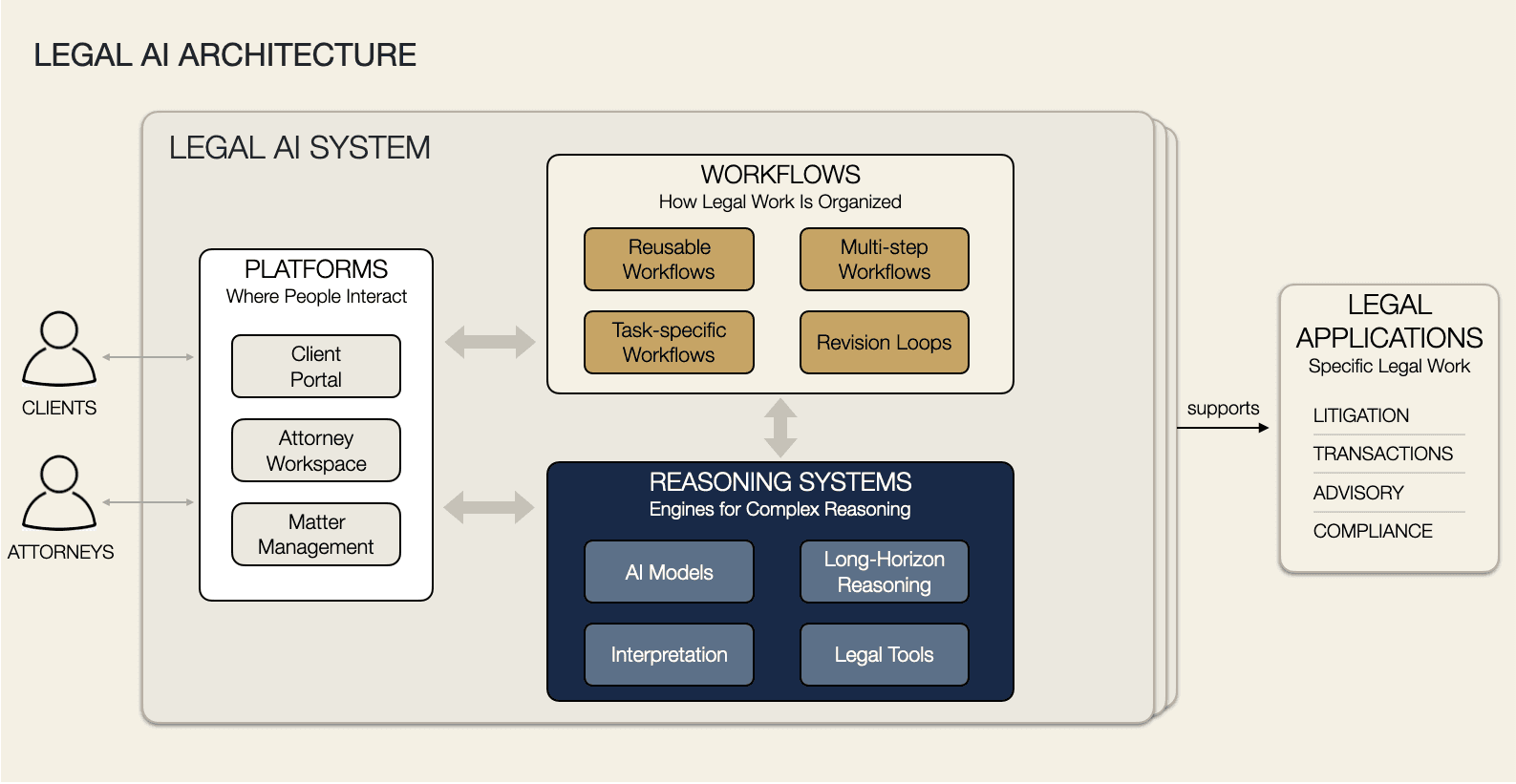
Platforms, workflows, and reasoning systems working together to support legal work.
01 · Platforms
Infrastructure for AI-assisted Legal Work
Client Portal · Attorney Workspace · Workflow Engine · AI Team · Work Product Registry
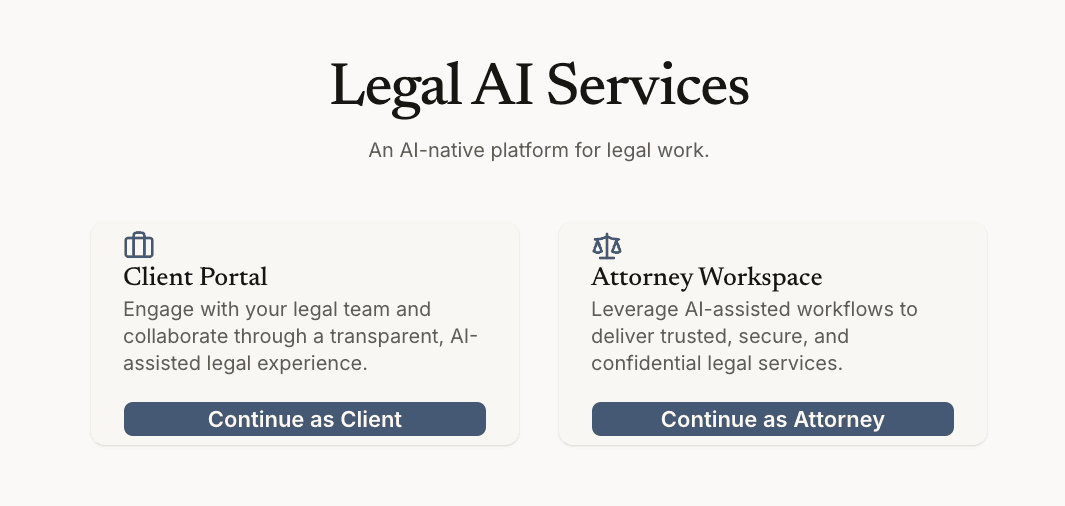
Legal AI Services Platform
A working environment for procuding AI-assisted legal work, from client intake through AI analysis, attorney review, revision, and final work product.
View Legal AI Services Platform →02 · Workflows
Structured Legal Processes
A legal workflow is a series of connected steps that moves a legal task from a starting point to a finished piece of work. AI can assist at each step.
View Example Workflow →03 · Reasoning Systems
Computational Legal Reasoning.
New computational approaches to legal reasoning — designed to help AI work through complex, multi-step legal problems.
Long-Horizon Reasoning· Exploration
Reasoning across dependent steps while maintaining context and evidence.
Multimodal Reasoning· Exploration
Integrating text, figures, diagrams, images, and other evidence into legal reasoning.
Reasoning Architecture· Concept
Architectures for coordinating models, tools, memory, work products, and review.
Reasoning Training· Concept
Methods for developing AI systems capable of structured legal reasoning.
04 · Legal Applications
Systems Built For Comprehensive Legal Problems.
We build AI computational systems around specific legal problems — not simply AI tools that answer legal questions.
- 01
A concrete legal problem
We start with a difficult legal task that requires structured analysis, evidence, competing arguments, and legal judgment.
- 02
A computational model
We translate the problem into representations, reasoning steps, evidence, and interactions that an AI system can work with.
- 03
A working application
We build an end-to-end system that can analyze the problem, generate work products, support review, and be evaluated against meaningful outcomes.